


Kan färsk selleri frysas? Bästa metoden och användningsområden
Oct 28, 2019
Ja, färsk selleri kan frysas, men den behåller inte den krispiga konsistensen hos en färsk stjälk. Frysning bildar iskristaller inne i vävnaden, så tinad selleri blir mjukare och kan släppa ifrån sig vatten. Den förändringen är inte ett misslyckande när sellerin är avsedd för soppa, buljong, gryta, sås, fyllning, gratäng eller annan tillagad rätt. Den är en dålig matchning för snacksstavar, grönsaksstavar och sallader där krispighet är den viktigaste kvaliteten.
För bästa planerade hem-frysningsresultat, använd krispiga, mjälla stjälkar; tvätta och trimma dem; skär dem i ungefär 1-tums längder; blanchera i vatten- i 3 minuter; kyl omedelbart; låt rinna av ordentligt; packa utan luftutrymme; förslut; och frys. Detta är sellerispecifika metoden som publicerats av National Center for Home Food Preservation. Blanchering lägger till ett steg, men det hjälper till att sakta ner enzymaktiviteten som annars kan skada färg, smak och textur under frysförvaring.
Det praktiska svaret:Frys selleri för tillagade rätter, inte som ett substitut för krispig rå selleri. Förvällning är det bättre valet när du förbereder en sats för frysen. Om du fryser en liten mängd rå för kortsiktig bekvämlighet, förvänta dig ett mjukare resultat och använd det direkt i en tillagad rätt.

Vilka förändringar uppstår i selleri vid frysning
Färsk selleri innehåller en stor mängd vatten som hålls inne i krispiga cellstrukturer. När vattnet fryser och expanderar, skadar iskristaller några av dessa strukturer. Efter upptining kan vävnaden inte hålla vatten på samma sätt, vilket förklarar den mjukare konsistensen och vätskan som kan samlas runt bitarna. Snabbare frysning och mindre, uniforma skärningar kan minska skadan från stora kristaller, men de kan inte få fryst selleri att bete sig exakt som färsk selleri.
Det rätta valet börjar därför med det slutliga användningen. Håll selleri färsk för råa presentationer. Frys överskott av selleri när arom, smak och matlagningskomfort är viktigare än rå krispighet. För ett kommersiellt recept, bedöm ingrediensen efter att den har genomgått den riktiga värmebehandlingen istället för att utvärdera en tinad bit på egen hand.
| Val | Bäst användning | Förväntat resultat | Huvudsaklig avvägning |
|---|---|---|---|
| Raw-frozen celery | |||
| Blanched-frozen celery |

This method follows the celery-specific preservation guidance from the National Center for Home Food Preservation. Work in manageable batches so the blanching water returns to a boil quickly and the cooling step can stop the heat without delay.
- Select good stalks. Choose crisp, tender celery without decay or coarse, stringy sections. Freezing preserves the condition you start with; it does not improve weak raw material.
- Wash and trim. Rinse thoroughly, separate the stalks where soil may be trapped, and remove the base, leaves if unwanted, bruised areas, and tough strings.
- Cut to a useful size. The published home method specifies 1-inch lengths. A consistent cut also helps the pieces blanch and cook more evenly.
- Water-blanch for 3 minutes. Lower the celery into actively boiling water, cover, and begin timing when the water returns to a boil. Do not intentionally shorten or greatly extend the treatment.
- Cool promptly. Transfer the celery immediately into abundant ice water. Move the pieces through the water so heat escapes, then stop cooling once the pieces are cold.
- Drain thoroughly. Excess surface water becomes unnecessary ice and can encourage pieces to freeze into a block. A clean towel or salad spinner can help remove moisture without crushing the celery.
- Pack, seal, and freeze. Pack in freezer-grade containers or bags with no headspace, press out excess air without damaging the pieces, seal securely, label with the date, and freeze promptly. An optional single-layer tray freeze before final packing can help keep the pieces loose for portioning.
The three-minute blanch is tied to the 1-inch preparation in the published method. If you choose a much finer dice or a different form, do not assume the same home procedure has been validated for it. The safest practical choice is to follow a tested preservation method or the directions for the specific commercial product rather than inventing a time from appearance alone.
Work quickly after cooling. Warm, wet celery freezes slowly and carries more surface ice into the pack. Cold, well-drained pieces in a thin package freeze faster, use freezer space efficiently, and are easier to portion later. These handling details do not preserve raw crunch, but they improve the usefulness of the frozen ingredient.
Do not use the microwave as a blanching shortcut. The National Center for Home Food Preservation notes that microwave blanching may not inactivate enzymes effectively and does not save meaningful time or energy. Use the tested water-blanching method when preparing celery for planned frozen storage.
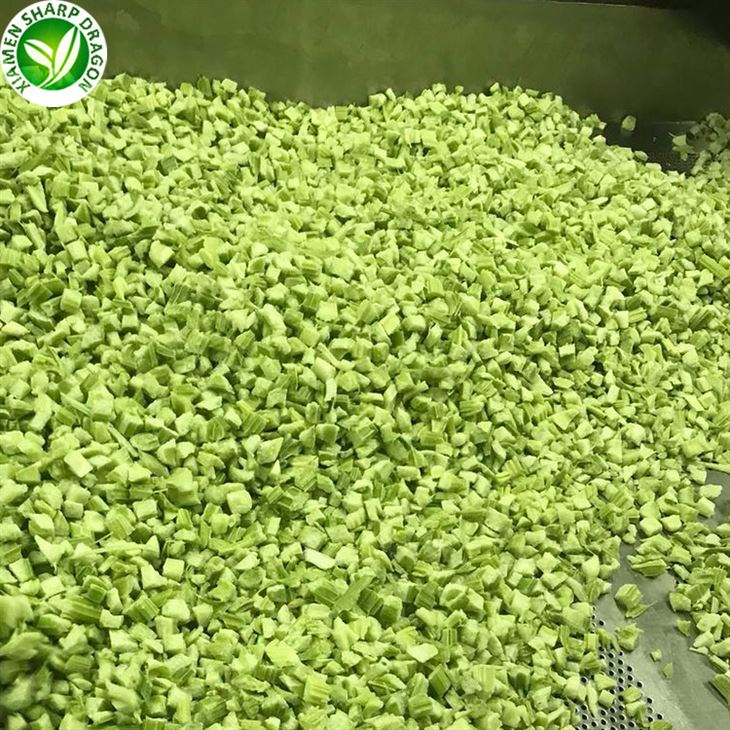
You can freeze cleaned, chopped celery without blanching when convenience is the priority and you accept faster quality decline. Raw freezing can be reasonable for a small leftover amount that is already destined for stock, soup, or sauce. Wash it, trim it, dry it carefully, cut it to the intended cooking size, freeze it in a thin layer if loose pieces matter, and transfer it to a freezer-grade pack.
Blanching is the better default for a planned batch because freezing alone does not stop every quality-changing reaction. Blanching slows or stops enzyme action, while prompt cooling prevents the retained heat from over-softening the celery. Underblanching can be worse than no blanching because it may stimulate enzyme activity; overblanching creates unnecessary cooked flavor and texture loss. Use the tested time instead of estimating by color.
Do not thaw frozen celery in cold water as a routine step. Water thawing can wash away flavor and leave the pieces wetter. For most cooked dishes, add the required portion directly from frozen and adjust the recipe for the small amount of water the celery releases. If a recipe requires thawing for mixing or portion control, thaw it under refrigeration and drain it before use.

Frozen celery performs best when the dish already softens the vegetable and uses its savory aroma. Good applications include soup bases, stocks, stews, braised dishes, tomato sauces, gravies, cooked stuffing, meat or vegetable fillings, casseroles, and ready meals. Smaller dice disperse quickly through a sauce or filling; larger cuts remain more visible in a stew. In either case, the final recipe should determine the cut.
Add frozen celery near the beginning when it is part of an aromatic base that needs time to soften and blend with onion, carrot, or seasoning. Add it later when visible piece identity matters or when the product has already received substantial blanching. For a stir-fry, use high heat, avoid crowding the pan, and expect a tender result rather than fresh crunch.
Cook the celery in the actual recipe at the intended inclusion rate. Check aroma, color, fiber perception, water release, piece visibility, and texture at the end of the complete process. A sample that looks acceptable while frozen may behave differently after sauce cooking, reheating, or hot holding.

For commercial use, the decision is not simply fresh versus frozen. Buyers need a celery format that fits their line, recipe, pack handling, and finished-product target. XMSD's provides a starting point, but the order specification and an approved sample should control the transaction.
1. Match the cut to the application
Define the intended dice, slice, or length together with a practical tolerance and test method. A fine dice can disappear into soup or sauce; a larger cut may remain visible but reveal more fiber. State whether leaves are allowed, how much stem color variation is acceptable, and whether the pieces must remain free-flowing for automated dosing. Our is organized around this application-first discussion.
2. Evaluate cooking performance, not marketing adjectives
Terms such as "premium" or "crisp" do not define performance. Compare samples under the same recipe, equipment, time, and temperature. Record aroma, color, tenderness, fibrous pieces, water release, clumping, and cooked yield. Ask how blanching is controlled and which finished-product checks support the agreed limits. Excessive softness, uneven color, large frozen blocks, or high free water are practical reasons to investigate before approval.
3. Connect packaging to handling
Pack size should fit consumption rate, storage space, and dosing practice. A large bag may reduce packaging cost but increase exposure and clumping after repeated opening. Check bag seal integrity, carton strength, label information, pallet pattern, and the cold-chain plan. XMSD's overview of can help frame that discussion, but the final material and format should be confirmed for the actual product and market.

Freezing slows microbial growth, but it does not sterilize celery. Begin with clean raw material, use clean equipment and hands, cool blanched celery promptly, protect it from cross-contamination, and keep it consistently frozen. Once the product is used in a meal, the safety controls for the complete dish still apply.
Surface frost, freezer burn, and some clumping are mainly quality signals. They may point to moisture migration, poor air removal, a weak seal, slow freezing, or temperature fluctuation, but they do not by themselves prove that the food is unsafe. Damaged packaging, evidence of thawing, abnormal odor after controlled thawing, or missing temperature records require a separate safety and acceptance review.
There is no useful universal storage promise for every celery pack. Quality life depends on pretreatment, freezing speed, packaging barrier, freezer temperature, temperature stability, and the buyer's acceptance limits. At home, label and rotate the packs. In trade, use the agreed shelf-life specification, storage condition, and arrival criteria for the exact product rather than borrowing a number from an unrelated celery format.

A Practical Frozen-Celery Approval Checklist
- State the final use, recipe, cook method, and target piece visibility.
- Define the cut style, nominal size, tolerance, leaf content, color range, and defect limits.
- Confirm ingredients, pretreatment, allergen status, required testing, and destination-market documents.
- Test samples in the real process and record aroma, fiber, water release, tenderness, and cooked yield.
- Agree on pack size, label, seal, carton, pallet, frozen storage, and shipment requirements.
- Set arrival checks and retain an approved reference sample or clear photo standard.
This converts a broad request for "frozen celery" into an approval process that purchasing, quality, production, and the supplier can all follow. It also makes comparisons fair: every sample is judged against the same intended use and the same measurable limits.
The acceptance decision should combine documents with product evidence. A certificate does not show whether the celery will release too much water in a sauce, and a good-looking sample does not replace current compliance records. Buyers reduce risk by confirming both, then retaining the approved criteria for future lots.
Send the intended application, cut preference, pack format, destination market, and estimated volume. We can discuss a relevant sample and a specification based on how the celery must perform in your product.