


Förlorar bananer näringsämnen när de fryses? Vad som faktiskt förändras
Oct 25, 2019
Bananer tappar inte plötsligt sitt näringsvärde när de fryses. Vanlig banan som skalas, skärs och fryses ger fortfarande kolhydrater, fiber, kalium, vitamin B6, vitamin C och andra komponenter som finns i frukten. Frysning är generellt en näringsbevarande metod eftersom låg temperatur bromsar många kemiska, enzymatiska och mikrobiska förändringar. Det tar inte bort mineraler eller fiber, och det tillsätter inte socker eller kalorier.
Det kvalificerade svaret är att retentionen inte är 100% eller identisk i varje produkt. Vissa vitamin C och andra oxidation-känsliga föreningar kan minska under skalning, exponering för luft, fryst lagring, upptining eller senare tillagning. Mängden beror på mognad, bearbetningshastighet, fryshastighet, förpackning, lagringstid och temperatur, samt om upptinat vätska behålls i receptet. Frysning förändrar bananens textur mycket mer tydligt än den förändrar den grundläggande näringsprofilen. En upptinad banan blir mjukare eftersom iskristaller stör vävnaden; den fysiska skadan betyder inte att dess näringsämnen har försvunnit.
Det korta svaret:Om de fryses på rätt sätt behåller vanliga bananer större delen av sin näringskaraktär. Mineraler, fiber, kolhydrater, protein och fett är relativt stabila; känsliga vitaminer och växtföreningar kan förändras vid bearbetning och lagring. Exakt bevarande kräver produktspecifika data, inte en universell procentsats.

Vad frysning gör med en banan
Frysning omvandlar en stor del av vattnet i bananvävnad till is. Processen saktar kraftigt ner reaktioner som driver mognad och kvalitetsförlust, men den stoppar inte varje reaktion för alltid. Enzymer kan behålla viss aktivitet, syre kan fortfarande nå dåligt skyddade ytor, och temperaturfluktuationer kan påskynda försämring. Detta är varför råvarans skick, snabb hantering, stabil lagring samt fukt- och ångresistent förpackning alla påverkar slutresultatet.
Iskristaller kan spräcka växtcellers väggar. FAO beskriver detta som en anledning till att fryst frukt blir mjukare efter upptining. Den gamla idén att snabbfrysning "säkerställer cellintegritet" är därför för absolut. Snabbare frysning ger vanligtvis mindre kristaller och kan minska fysisk skada, men ingen ansvarig förklaring bör lova att varje cell förblir intakt. Bananer är naturligt mjuka och vattenrika, så skillnaden är lätt att se som frigjord vätska och en mosbar konsistens.
Den texturförändringen är inte automatiskt ett fel. Mjuk, tinad banan fungerar bra i smoothies, puréer, bakverksmet, såser, mejeriprodukter och frysta desserter. Den är mindre lämplig när användningen kräver en färsk, fast skiva efter upptining. Den praktiska bedömningen bör därför skilja på näringsbevarande och texturprestanda: frysning kan bevara frukten som en användbar ingrediens samtidigt som dess utseende och känsla förändras.

Vilka näringsämnen är stabila och vilka är mer känsliga?
USDA FoodData Central listar rå banan med cirka 89 kcal, 22,84 g kolhydrater, 2,6 g kostfiber, 358 mg kalium, 8,7 mg vitamin C och 0,367 mg vitamin B6 per 100 g. Dessa siffror beskriver en rå referensmatvara, inte varje parti fryst banan. De är användbara för att visa vilka näringsämnen som finns innan bearbetning, men de kan inte användas som en garanterad analys för en kommersiell fryst produkt.
Kalium bidrar till normal cellfunktion, nervsignalering och muskelsammandragning. Vitamin B6 deltar i många enzymreaktioner som är involverade i ämnesomsättningen, medan vitamin C har antioxidantfunktioner och behövs för kollagensyntes. Dessa fysiologiska roller förklarar varför behållning är viktig, men de förvandlar inte fryst banan till en behandling. En portion bidrar med näringsämnen inom hela kosten; den garanterar inte ett kliniskt resultat.
| Näringsämne eller komponent | ||
|---|---|---|
| Vitamin B6 and plant compounds | Retention is product- and process-dependent |
Studies comparing fresh and frozen produce show why a single slogan is unreliable. Research across several fruits and vegetables found that mineral, fibre, and phenolic retention depended on the commodity, with no significant fresh-versus-frozen difference for most tested items and analytes. Reviews of frozen plant foods also show that antioxidant measures may decrease, remain stable, or occasionally appear higher depending on the fruit, pretreatment, tissue damage, extraction, and storage. These findings support a qualified conclusion for bananas; they do not provide a banana-specific retention percentage.

A green banana and a fully ripe banana are not nutritionally identical before either one enters a freezer. During ripening, banana starch is converted into soluble sugars, the fruit softens, and flavour and aroma develop. Research measuring bananas at different retail ripeness stages found large differences in starch and sugar content. This means a sweet frozen banana is usually sweet because it was ripe when frozen, not because freezing created sugar.
Ripeness also changes how the ingredient behaves. A less-ripe banana may provide a firmer, starchier result, while a riper banana is sweeter, softer, and often easier to blend. Variety, growing conditions, maturity, and water content add further variation. For home use, freeze bananas at the stage that suits the intended recipe. For commercial use, define a ripeness or soluble-solids target only when it can be supported by the agreed specification and measurement method.
Product form creates another important distinction. Plain frozen banana is not nutritionally equivalent to chocolate-coated banana, sweetened puree, banana ice cream, a smoothie with syrup, or fried banana chips. Freezing itself does not add sugar or fat, but a formulation can. Anyone comparing labels should first confirm whether both products are 100% banana and whether the values use the same serving or 100 g basis.
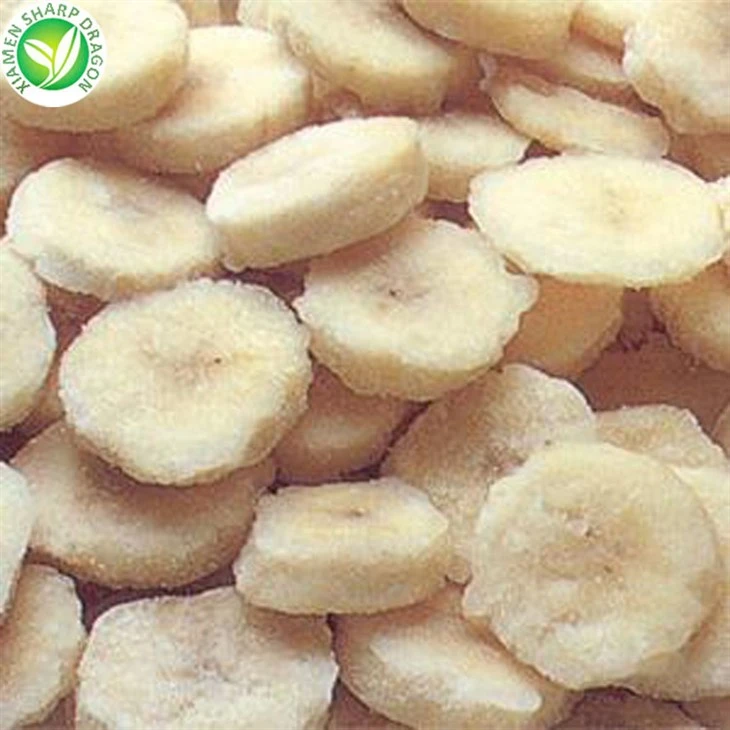
Good retention depends on a stable frozen chain. Repeated warming and refreezing can encourage larger ice crystals, more drip loss, clumping, browning, and texture damage. Oxygen exposure and inadequate packaging can also accelerate quality loss. A pale, free-flowing product is not direct proof of a vitamin level, but excessive surface ice, damaged packaging, fused pieces, or unexpected darkening can justify a closer review of handling history and application performance.
Thawing matters because some soluble material moves with the released liquid. If a recipe uses both the softened banana and its liquid, less material is discarded than when the liquid is drained away. A smoothie can usually use banana directly from frozen. Bakery production may thaw and mash it, but the formula should account for released moisture. Long holding after thawing increases exposure to oxygen and creates a food-safety management issue as well as a quality issue.
Cooking adds a separate process. Heat can reduce vitamin C and other heat-sensitive compounds, while the extent depends on temperature, time, water, and whether cooking liquid remains in the food. A banana bread, sauce, or dessert should therefore be judged as a finished recipe. It is misleading to attribute every nutritional difference between a fresh banana and a baked frozen-banana product to freezing alone.
Food-safety note: Freezing stops the growth of bacteria while food remains frozen, but it does not reliably kill all microorganisms. Use clean handling, follow the product instructions, maintain the cold chain, and confirm whether a commercial ingredient is intended for ready-to-eat use or further processing.
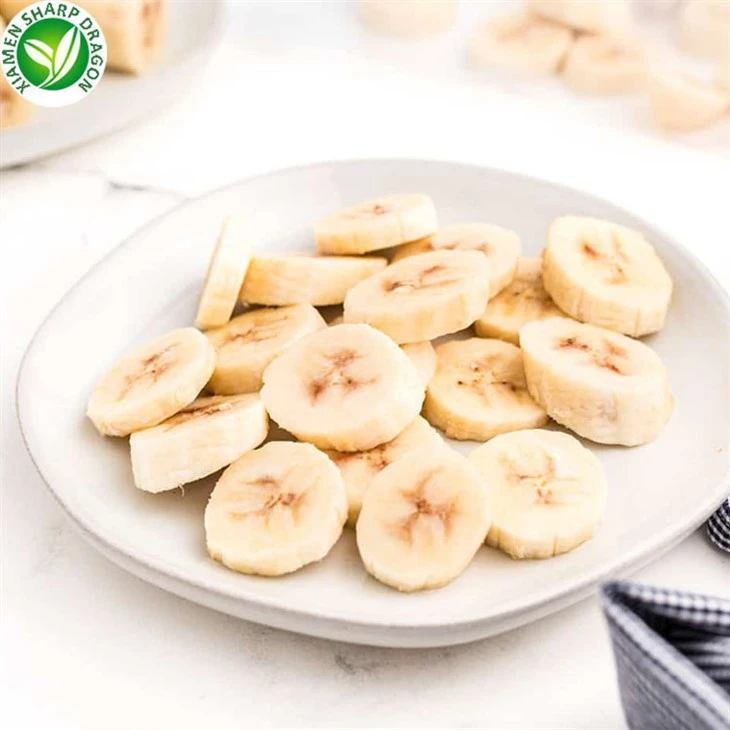
A useful claim should identify the food form, comparison basis, and evidence. "Frozen banana retains all nutrients" is too strong because it ignores sensitive nutrients and storage. "Frozen banana loses nutrients" is also too broad because minerals, fibre, and macronutrients do not simply vanish. The defensible answer is conditional: plain frozen banana retains much of its overall nutritional profile, while some components can change with processing and time.
- Identify the exact food. Check whether it is whole banana, slices, chunks, puree, a sweetened pack, a coated snack, or a prepared dessert.
- Use the same measurement basis. Compare equal edible weights and the same preparation state. A 100 g raw-fruit database entry and a 100 g sweetened frozen dessert answer different questions.
- Separate composition from retention. A nutrition panel shows the product's declared composition; a retention claim requires a suitable fresh baseline and a validated method.
- Check the handling variables. Ripeness, pretreatment, freezing rate, storage duration, temperature stability, oxygen barrier, thawing, and cooking can all influence the result.
For everyday use, this usually leads to a simple decision: choose plain frozen banana when its convenience and soft texture suit the recipe, keep it well packaged and frozen, and count any added ingredients in the finished dish. It can be part of a varied diet, but no single food needs to carry the burden of meeting every nutrient requirement.

What B2B Buyers Should Verify
For an importer, beverage producer, bakery, dairy processor, foodservice distributor, or retail brand, the question is not solved by saying "IQF locks in nutrients." IQF describes an individual freezing format and can support portionability and product separation. It does not guarantee a specific nutrient value, colour, ripeness, microbiological result, or shelf life without supporting product evidence.
1. Match the Evidence to the Product
Start with the ingredient statement and product identity. Confirm whether the item is 100% banana and define the cut or puree form. Then ask whether the nutrition values come from a recognized database, a calculation, or laboratory analysis. The supporting basis should match the destination-market rules and the product actually being sold. A generic raw-banana table is a reference, not a certificate for every frozen batch.
A risk signal is a supplier quoting an exact retention percentage without naming the baseline, nutrient, sampling point, storage interval, or method. Better evidence states the sample identity and analytical basis. Acceptance can then be defined around the required nutrition declaration, ingredient statement, and any claim threshold relevant to the intended market.
2. Test the Product in Its Real Application
Nutrition is only one part of commercial suitability. A smoothie buyer should review blending performance, sweetness, colour, and portionability. A bakery buyer should measure thawed liquid and test moisture balance, flavour, crumb, and colour. Dairy and dessert developers should confirm how the banana disperses and whether the selected form produces the desired texture. The appropriate acceptance sample is therefore application-specific.
explains the distinction between slices, dices, chunks, and puree. Buyers should use that form decision before setting texture or yield acceptance criteria.
3. Treat Packaging and Cold Chain as Part of Quality
Packaging should limit moisture loss, oxygen exposure, seal failure, and handling damage while remaining suitable for the pack size and channel. Review the inner bag, closure, carton, label, batch coding, and storage statement together. XMSD's frozen-food packaging overview shows the variables buyers can discuss; the final material and artwork still need approval for the specific banana product and destination.
On arrival, compare package integrity, product temperature records where required, piece separation, surface ice, colour, odour, and thawed performance with the approved sample and specification. These observations cannot measure vitamin content, but they can reveal handling problems that justify further investigation. Nutrient declarations and quality acceptance should remain connected without being treated as the same test.

confirms slices, chunks, and customized cut discussions for B2B applications. Buyers can request the current ingredient statement, specification, packing options, sample plan, and available product documents for review.
Freezing does not add sugar to plain banana. Ripeness is the larger variable because starch changes into sugars as bananas ripen. Added syrup, chocolate, sweetened puree, or other ingredients can raise the sugar content of a prepared frozen product.
Not automatically. The liquid contains water and soluble material released from damaged tissue. Keeping it may preserve yield and some soluble components, but it can make a batter or filling too wet. Decide according to the recipe, and include the choice in application testing.
Does minus 18 degrees mean the banana was quick-frozen at that temperature?
Not necessarily. -18℃ is commonly used as a frozen storage condition. The freezing equipment, air temperature, product core temperature, residence time, and storage set point are different process variables. Do not describe -18℃ as the quick-freezing machine temperature unless the actual process record confirms it.
Frozen bananas remain nutritionally useful, but the accurate answer is more precise than "all nutrients are locked in." Freezing preserves much of the fruit's overall profile; minerals, fibre, and macronutrients are comparatively stable, while vitamin C and some plant compounds are more sensitive to processing, storage, thawing, and heat. Ripeness and added ingredients can change the comparison as much as, or more than, freezing. For a commercial decision, verify the exact product, evidence basis, application performance, packaging, and cold-chain history.
- USDA FoodData Central - Bananas, Raw
- FAO - Freezing of Fruits and Vegetables: Final Product Quality
- University of Minnesota Extension - How to Freeze Fruit Safely
- NIH Office of Dietary Supplements - Potassium Fact Sheet
- NIH Office of Dietary Supplements - Vitamin B6 Fact Sheet
- NIH Office of Dietary Supplements - Vitamin C Fact Sheet